
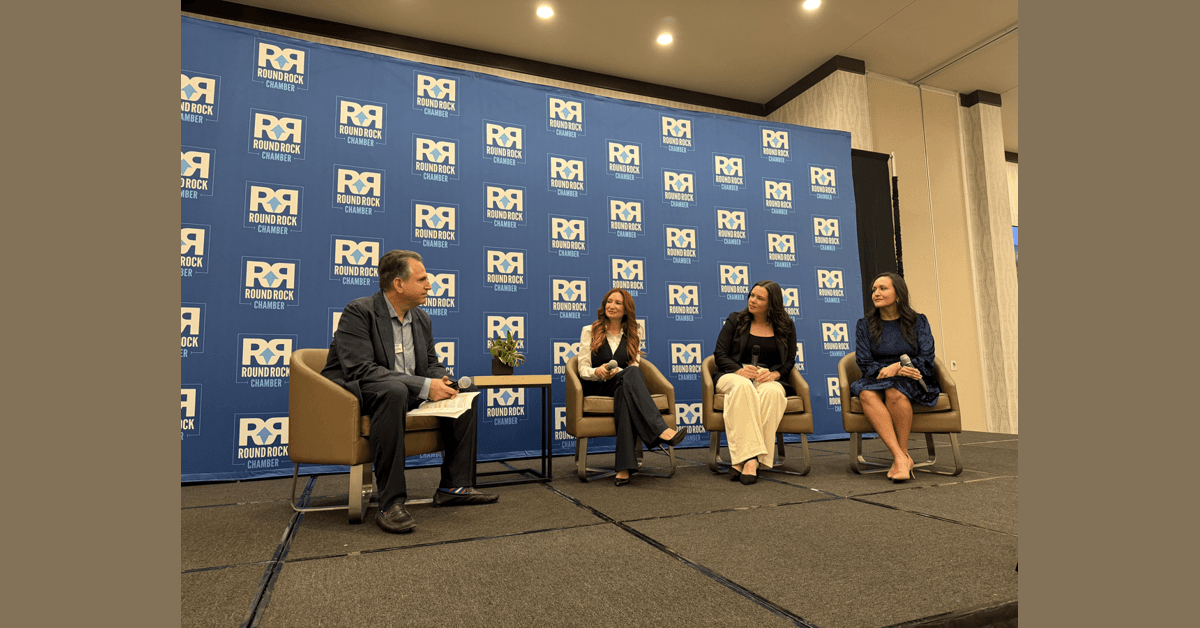
The Round Rock Chamber of Commerce began 2026 with a State of the Chamber Power Lunch attended by more than 230 business leaders from across Central Texas. The event featured a live recording of the Rock Solid Round Rock podcast to facilitate a transparent discussion about the organization's future direction. Outgoing Board Chair Selicia Sanchez-Adame reflected on 2025 achievements including the Chamber's 75th anniversary and progress toward reaching 1,000 members, while emphasizing the continued importance of relationship-building through programs like the Ambassador network.
Chamber leadership outlined key economic development priorities focused on collaboration, including a unique partnership between the City of Round Rock and the Chamber and a five-year strategic plan centered on economic development and innovation. Support for entrepreneurship remains a cornerstone, with ongoing backing for the gBeta accelerator and a preview of an upcoming pre-accelerator program. The discussion also highlighted efforts to advance awareness of local education assets, from degree pathways at Austin Community College to expanded opportunities at Texas State University beyond healthcare fields.
Advocacy at the state level was addressed by President & CEO Jordan Robinson, who shared insights from testifying during the 89th Legislative Session on issues like sales tax policy and maintaining relationships with state and federal officials. The Chamber's Post-Legislative event brought high-caliber speakers to help local businesses understand the broader policy landscape affecting their operations.
A significant announcement during the event was the launch of the Round Rock Chamber Foundation, which raised $400,000 through its Founders Wall Campaign. The Foundation will support business-to-business initiatives without competing with existing nonprofits, with initial focus areas including leadership development programs, the Young Professionals initiative, Leadership Round Rock, and Ascend. Additional updates included plans to return to the historic Griffith Building in downtown Round Rock, reinforcing the Chamber's commitment to the city's core.
Incoming Board Chair Deana Cavanaugh outlined priorities for the coming year centered on member retention, deeper engagement, and continued investment in the Chamber Foundation. Her remarks emphasized building on recent momentum while ensuring the organization remains responsive and closely connected to the businesses it serves. The live podcast format, hosted by Bryan Eisenberg, co-owner of A Place At Home – North Austin, created a shared experience that blended reflection with forward-looking vision, offering attendees clarity on how current leadership decisions will shape Round Rock's economic future.
The Chamber's strategic direction has significant implications for Central Texas businesses. The new foundation represents a substantial investment in leadership development that could strengthen the region's business ecosystem for years to come. By focusing on entrepreneurship support through programs like gBeta and planned pre-accelerator initiatives, the Chamber is positioning Round Rock as a hub for innovation and startup growth. The emphasis on education partnerships with institutions like Austin Community College and Texas State University suggests a workforce development strategy aimed at creating talent pipelines for local industries.
The Chamber's advocacy work at the state level, particularly around sales tax policy, directly impacts business operations and economic competitiveness. For Texas companies, understanding these policy developments through events like the Post-Legislative gathering can provide crucial insights for strategic planning. The return to the historic Griffith Building symbolizes both continuity and commitment to downtown revitalization, potentially influencing commercial real estate development patterns in the city center.
For the broader Texas economy, Round Rock's approach demonstrates how regional chambers can drive economic development through coordinated strategies that combine business support, policy advocacy, and community investment. The Chamber's model of transparent communication through innovative formats like live podcast recordings may influence how other business organizations engage with their members across the state.