

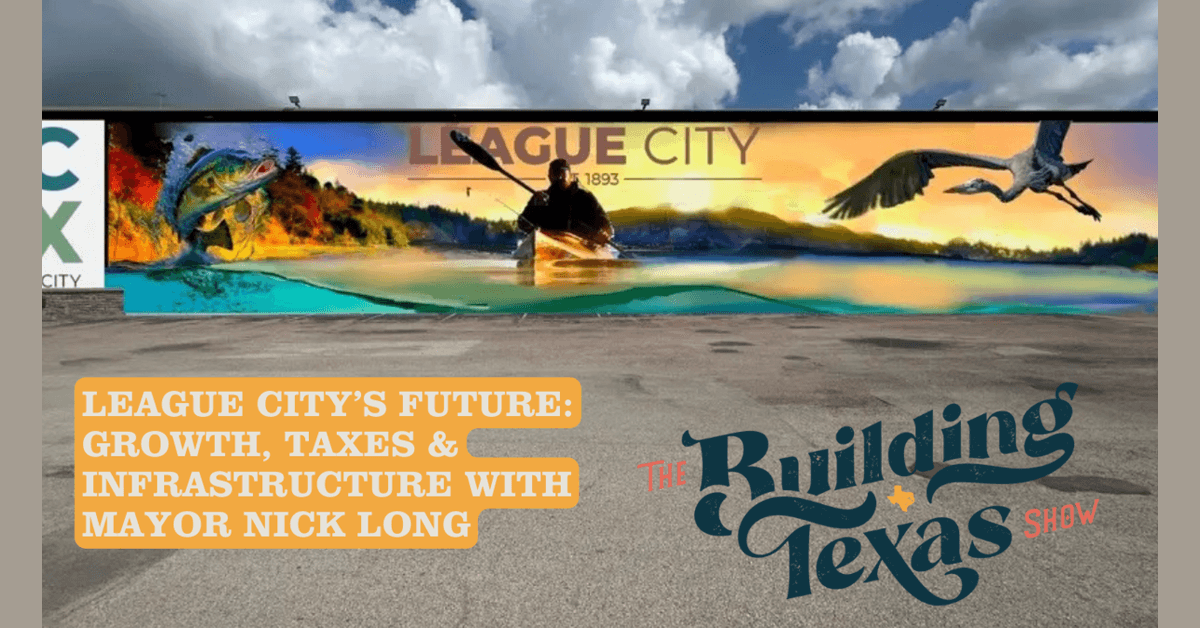
League City is undergoing a significant transformation from a suburban community to a major regional hub, with Mayor Nick Long emphasizing disciplined planning and fiscal restraint as essential to managing explosive population growth. The city's population has grown from approximately 30,000 residents to over 125,000 and is projected to exceed 200,000 within the next decade, requiring strategic approaches to infrastructure and development.
A central component of League City's strategy involves taxation and development policies designed to avoid burdening residents. The city has focused on lowering the property tax burden in real dollars by pursuing the "no new revenue" tax rate while diversifying revenue streams through sales tax growth, online commerce, and development that pays its own way. This approach has allowed infrastructure investments without shifting costs onto homeowners, a critical consideration as the community expands.
Geographic advantages play a significant role in League City's evolution. Positioned near NASA and the Johnson Space Center, bordered by Clear Lake and Galveston Bay, and soon to be directly connected by the Grand Parkway, the city sits at the intersection of aerospace, maritime commerce, and lifestyle-driven relocation. Mayor Long explained how the Grand Parkway will connect the ports of Houston, Galveston, and Freeport, opening new opportunities for light industrial development and economic diversification that could further strengthen the local economy.
Beyond economic considerations, League City is cultivating its appeal as a destination where residents can "live where they vacation." The city boasts one of the largest recreational marina systems in the country, capitalizes on cruise tourism flowing down I-45, and hosts signature community events like Holiday in the Park. These amenities contribute to quality of life while attracting new residents seeking both opportunity and recreation.
Transparency and long-term planning emerge as defining values in League City's approach to growth. Mayor Long emphasized the city's commitment to publishing master plans, infrastructure studies, and executive summaries that help residents understand how League City is preparing for its future. This includes planning for water systems, drainage, west-side development, and transportation infrastructure to accommodate the projected population increase.
The full conversation offers a detailed look at how local leadership, regional cooperation, and disciplined growth strategies are shaping one of Texas' most promising cities. Viewers can watch the complete episode on YouTube for additional insights into League City's development approach.