

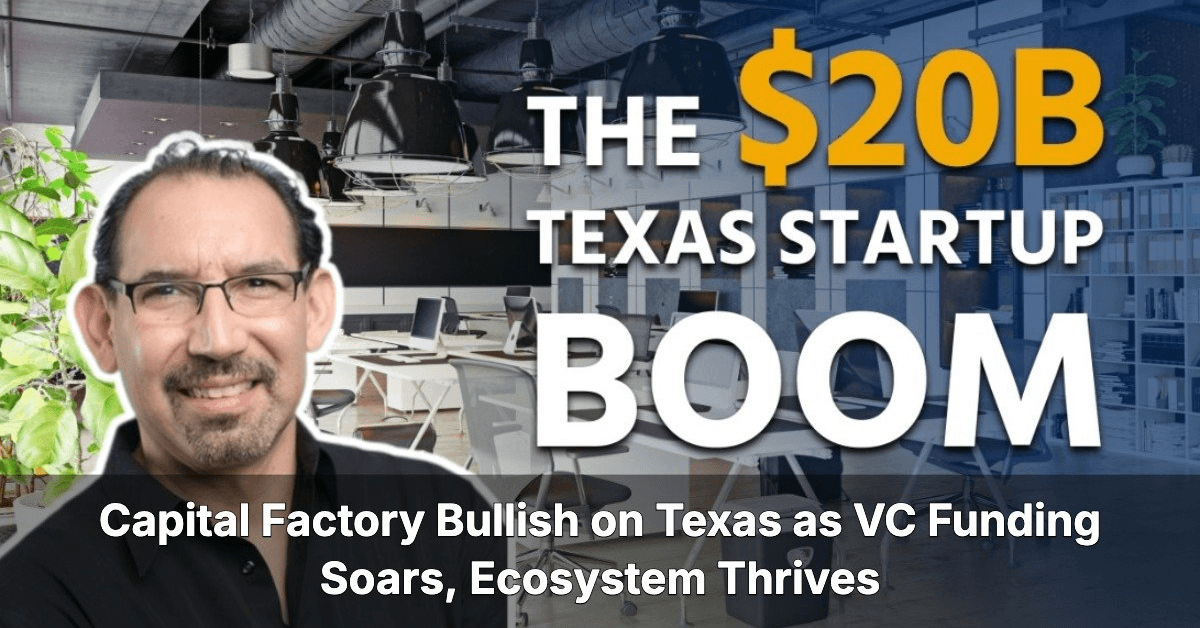
Texas's startup ecosystem achieved record venture capital investment in 2025, attracting nearly $20 billion statewide, with Austin securing approximately $8 billion, according to Capital Factory leader Luis Martinez. This performance places Austin among the top five U.S. cities for venture capital funding. Martinez, who appeared on The Building Texas Show, predicted 2026 will be "a banger year" for Texas venture capital, citing the state's strategic advantages beyond its well-known tax benefits.
The state's momentum is driven by several key sectors. Texas has become a hub for space industry leaders including Blue Origin, Intuitive Machines, and Firefly, with Martinez describing space excitement as "red hot." The inaugural Space Summit in San Antonio this September is expected to further galvanize this sector. In energy innovation, Texas is investing heavily in solar and nuclear energy, including small modular reactors and fusion, to meet demands from AI data centers and new industries.
Healthcare and life sciences represent another growing area, with collaborations involving institutions like MD Anderson, Baylor College of Medicine, and UT Southwestern. Public initiatives such as CIPRI for cancer research and DeepRIT for neurodegenerative diseases support this sector. Texas also shows strength in hard tech and industrials, with significant hardware innovation across chemicals, automotive, aerospace, and advanced materials, highlighted by Toyota's presence in the state.
Martinez explained that while Texas's favorable tax structure and efficient regulatory frameworks attract investment, the true advantage lies in three factors. First, Texas has achieved critical mass with established founders and companies often on their second, third, or fourth successful ventures. Second, the state benefits from a collaborative ecosystem with "natural flows of talent, people, and relationships" across major cities, fostering regional cooperation among angel networks like CTAN, Houston Angel Network, North Texas Angel Network, and Alamo Angels, along with economic development corporations and universities. Third, strategic public investment through initiatives like CIPRI, DeepRIT, and the Texas Space Commission de-risks and catalyzes private investment in key sectors.
Houston and Dallas-Fort Worth also showed significant venture capital growth alongside Austin's $8 billion funding, demonstrating the statewide nature of Texas's innovation boom. Martinez emphasized that Texas's historical dominance in energy is now expanding to include space exploration and other cutting-edge technologies, creating a diversified innovation economy that attracts talent and investment worldwide. The full interview with Martinez offers deeper insights into Texas's innovation strategy and can be viewed at https://buildingtexasshow.com.