

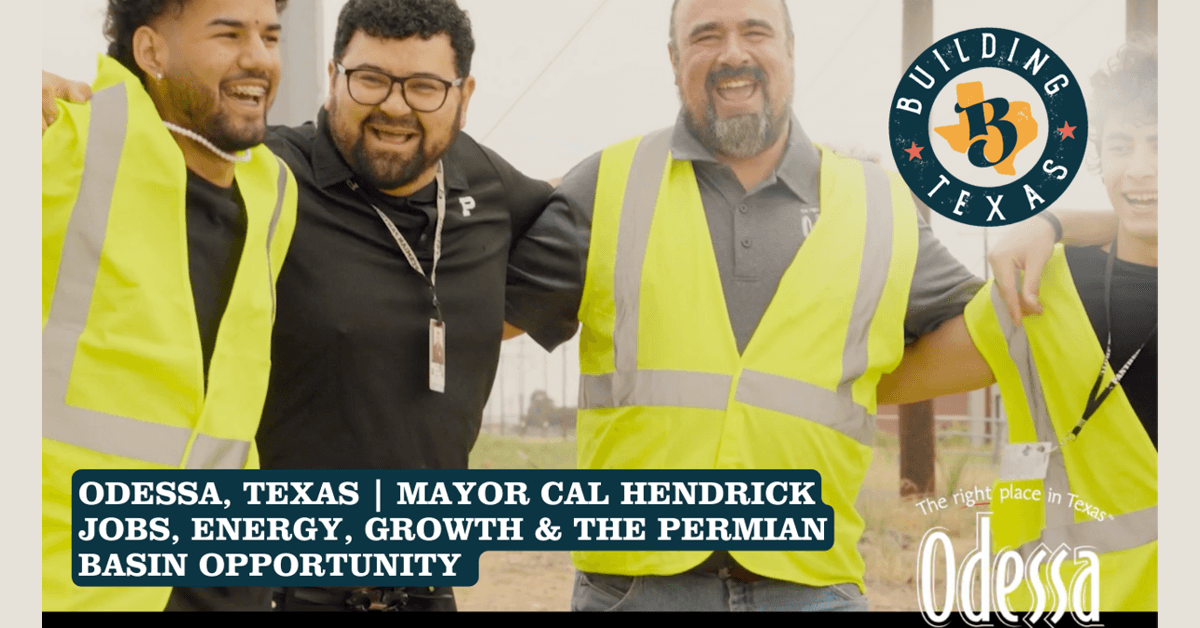
Odessa Mayor Cal Hendrick detailed the economic evolution of the Permian Basin during a recent interview on The Building Texas Show, emphasizing that while oil and gas remain foundational, the region's future hinges on strategic diversification and workforce development. Hendrick stated that Odessa is "underemployed, not overbuilt," highlighting sustained demand for skilled labor and entrepreneurial ventures as key drivers of opportunity.
The conversation focused on how educational institutions and training programs are creating pathways into high-demand careers such as welding, HVAC, plumbing, electrical work, and trucking. This workforce development is central to supporting not only traditional energy sectors but also emerging areas like energy efficiency, alternative power sources, and healthcare expansion. The region's appeal to investors and innovators is bolstered by access to energy resources, land, infrastructure, and a business-friendly regulatory environment.
Hendrick and host Justin McKenzie addressed the challenges accompanying rapid growth, including strain on water systems, roads, public safety, and healthcare infrastructure. The mayor outlined Odessa's approach to long-term planning through master planning initiatives, fiscal responsibility, and regional collaboration with neighboring communities like Midland. This coordinated effort aims to ensure sustainable development over the next fifty years.
McKenzie noted that improved connectivity, capital access, and workforce demand are transforming the Permian Basin into a "national brand for opportunity," reducing its historical geographic isolation. The full interview is available for viewing on YouTube as part of The Building Texas Show's series spotlighting Texas cities through conversations with civic leaders.
The discussion underscores a broader regional shift where economic resilience is being built through diversification rather than reliance on a single industry. By investing in education, infrastructure, and collaborative governance, Odessa is positioning itself to attract both talent and investment beyond the cyclical energy market, aiming to sustain its reputation as one of Texas's most opportunity-rich regions. This strategic approach matters because it demonstrates how Texas communities can build sustainable economic models that withstand industry fluctuations while creating lasting opportunities for residents and businesses.
The implications of this diversification strategy extend beyond Odessa to the entire Permian Basin region, potentially serving as a model for other energy-dependent areas seeking economic stability. As workforce development programs expand into high-demand technical fields, the region could see reduced unemployment and increased wage growth across multiple sectors. The focus on infrastructure planning addresses critical needs that often accompany rapid economic expansion, ensuring that growth doesn't overwhelm essential services.
For Texas businesses, this evolution signals new opportunities in emerging sectors like alternative energy and healthcare, while traditional energy companies benefit from a more skilled and diversified workforce. The regional collaboration between Odessa and Midland represents a significant shift toward coordinated economic development that could maximize resources and attract larger-scale investments. As the Permian Basin transforms into what McKenzie describes as a "national brand for opportunity," the entire state stands to benefit from increased investment, job creation, and economic stability that extends beyond cyclical energy markets.