

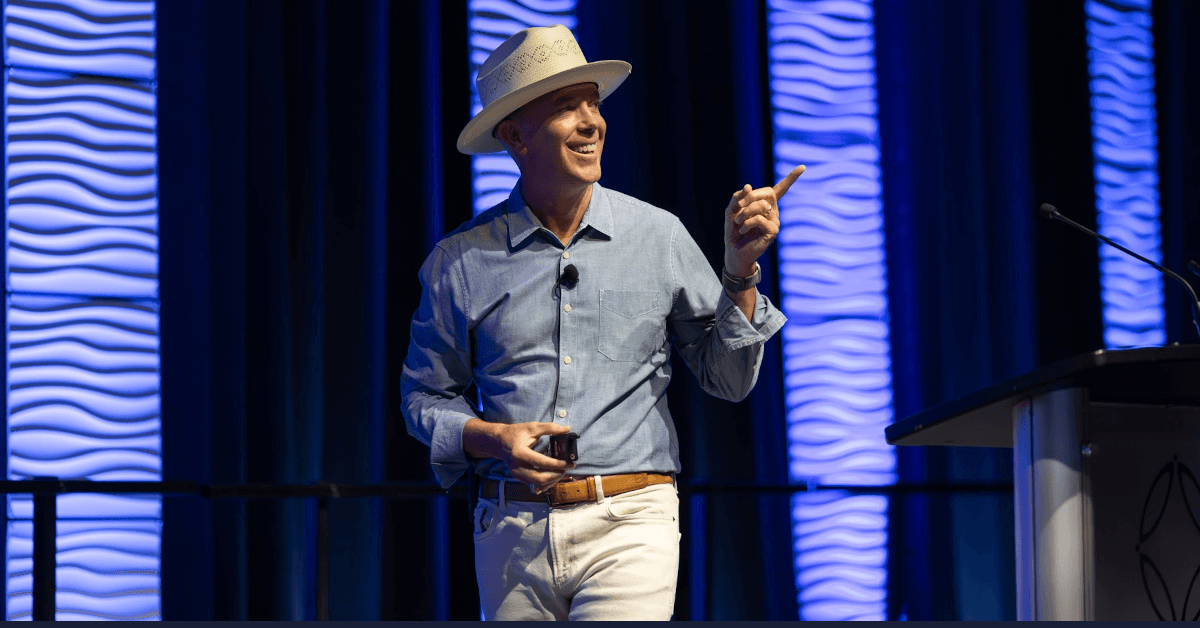
During a recent interview on the Building Texas Show, aerospace entrepreneur and military veteran Joseph Kopser identified a critical workforce shortage that could hinder Texas's emergence as a global hub for space exploration. Kopser emphasized that while the state hosts major aerospace companies, the industry requires more than just rocket scientists, needing skilled tradespeople to physically build and maintain spacecraft systems.
"We have to have a workforce to build those rockets, to sustain life support systems, and to build spacecraft," Kopser told host Justin McKenzie. "It's not just about rocket science design; it's about physically running pipes, tubes, and chambers that hold highly pressurized liquid oxygen. That takes plumbers, electricians, and welders with great skill." This shortage of skilled labor threatens to stall what Kopser called the "Texas economic miracle" driven by companies like SpaceX, Blue Origin, and Firefly Aerospace.
To address this gap, Kopser co-founded the Space Workforce Incubator for Texas (SWIFT), an initiative designed to connect 18-to-35-year-olds with vocational training and higher education pathways into the aerospace sector. "People will be what they can see," Kopser noted, stressing the importance of early exposure to these career opportunities. More information about this workforce development effort is available at https://www.swift.space.
The conversation also explored opportunities to reverse the "exporting of talent" from rural Texas communities. Kopser argued that fiber internet expansion and emerging autonomous supply chains create a historic opportunity for young people to remain in small towns while participating in the modern economy. "Now, with the reshoring of manufacturing and the ability to work remotely, you can live the quality of life you want in rural Texas while accessing the modern economy," he explained.
Kopser highlighted "dual-use" technologies—innovations serving both national defense and commercial sectors—as key economic drivers for Texas. He pointed to several Texas-based companies exemplifying this trend, including Apptronik in humanoid robotics, Saronic in autonomous watercraft, and LoCal in biochar energy solutions. These companies represent how private innovation can solve public challenges while creating economic opportunities. Details about their work can be found at https://www.apptronik.com, https://www.saronictech.com, and https://www.local.energy.
Currently campaigning for Texas House District 47, Kopser framed the workforce issue as urgent and consequential. "The skills gap is widening, and the decisions we make today will shape Texas's economy for decades," he stated. He expressed concern that "hyper-partisan politics consuming our country distract from the real work of creating jobs and giving kids a fair shot." Kopser continues to advocate for these economic priorities through his organization, USTomorrow, which can be explored at https://www.ustomorrow.org.
The implications of this workforce challenge are significant for Texas's economic future. If unaddressed, the shortage of skilled tradespeople could limit growth in the high-value aerospace sector, potentially causing companies to look elsewhere for talent and investment. Conversely, successful initiatives like SWIFT could secure Texas's position in the global space economy, create high-paying jobs across urban and rural communities, and provide new career pathways for young Texans without requiring four-year degrees. The integration of dual-use technologies further positions Texas to lead in emerging industries that blend commercial innovation with national security needs.